Need Help?
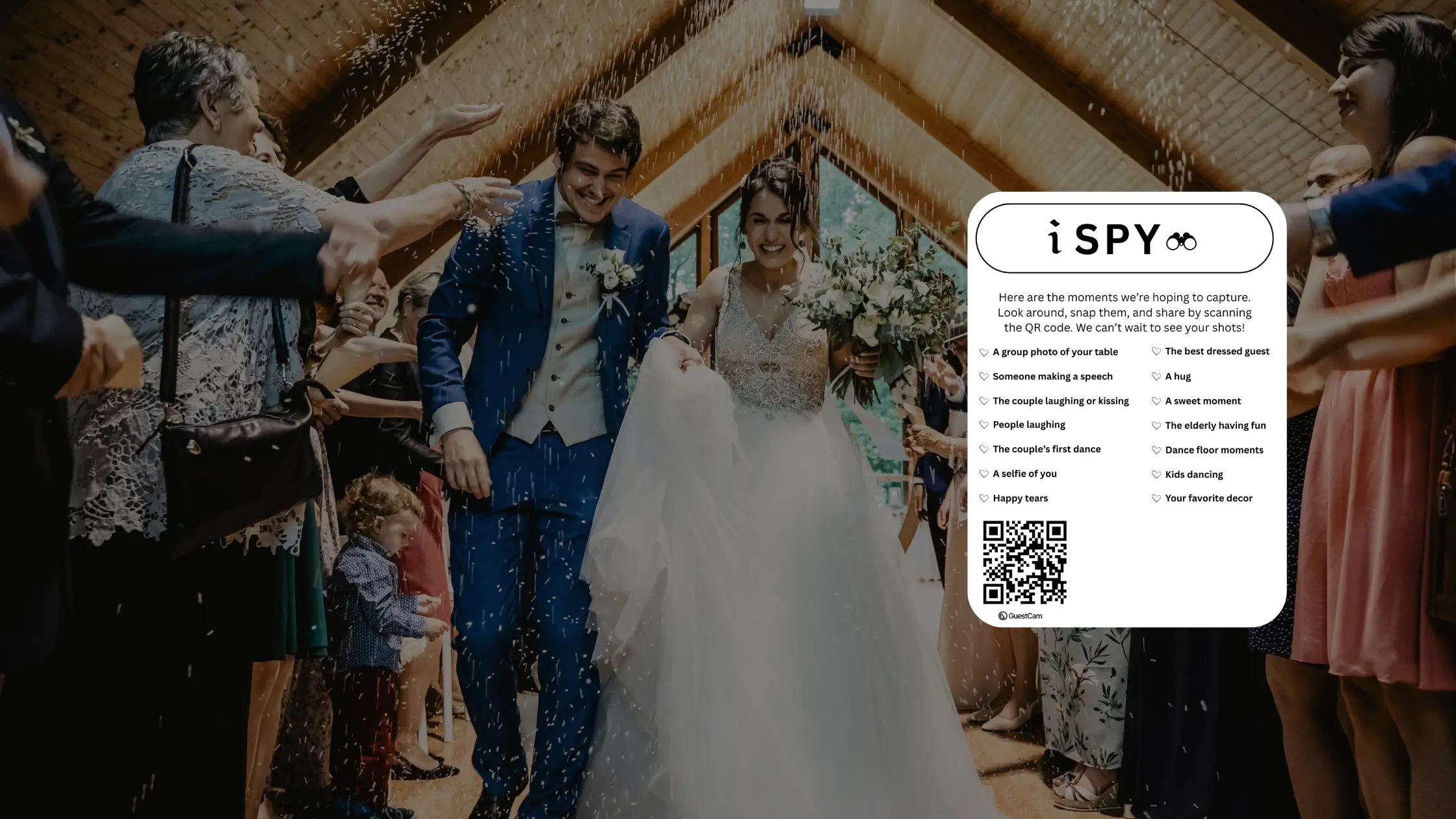
A wedding photo scavenger hunt gives guests a reason to notice the moments happening beyond the formal portraits: an old friend arriving, a parent reacting to a speech, or someone finally surrendering their uncomfortable shoes.
The best hunts do not send guests running around the venue or interrupting important moments. They offer a small selection of things to watch for, then let guests photograph them when they happen naturally.
Below are 30 candid prompts you can choose from, along with practical advice for turning them into an activity guests will actually enjoy.
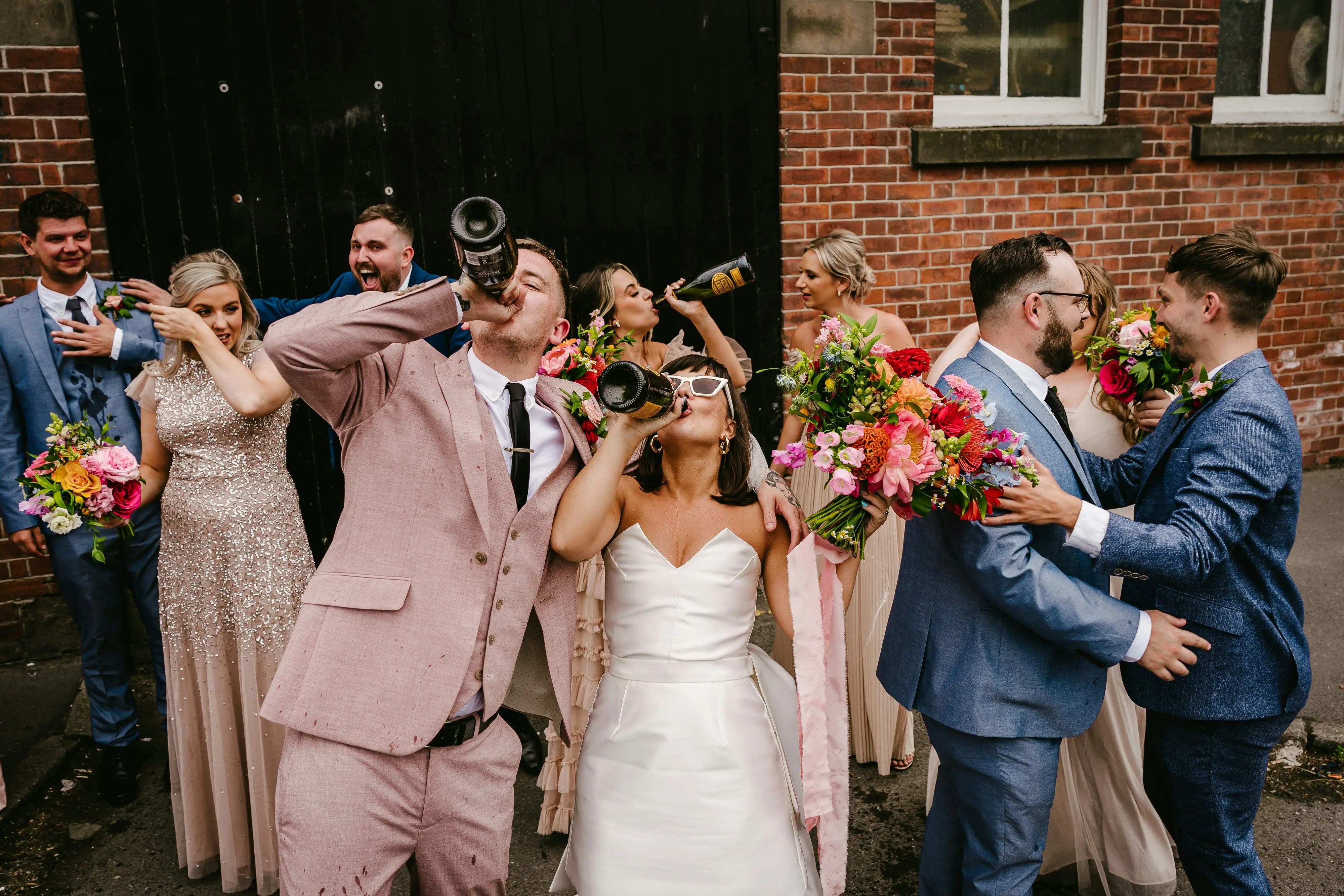
A wedding photo scavenger hunt is a list of people, interactions, and moments for guests to photograph during the celebration. It may be printed as a checklist, divided among reception tables, or arranged as a bingo card.
Unlike a traditional scavenger hunt, guests do not need to find hidden objects or solve clues. They simply keep an eye out for moments such as a reunion between old friends, an enthusiastic dancer, or someone reacting to a speech.
The resulting photos offer perspectives that the couple and professional photographer may not see. Guests are spread throughout the venue, sitting at different tables and spending time with different groups. Collectively, they can capture dozens of small interactions happening around the wedding.
Guest photos should complement professional photography rather than replace it. The photographer remains responsible for planned coverage, portraits, lighting, and the major events of the day. The scavenger hunt helps preserve the informal moments happening around that coverage.
If guests will be using their phones, give everyone one place to submit their pictures. A private wedding photo sharing gallery prevents the completed challenges from becoming scattered across text messages, group chats, and social posts.
Before choosing prompts, decide when guests are welcome to take photos.
If you are planning an unplugged ceremony, begin the scavenger hunt during cocktail hour or the reception. Do not include ceremony prompts that encourage guests to bring out their phones after you have asked them to put those phones away.
Even without an unplugged ceremony, guests should never leave their seats, step into an aisle, use distracting flash, or block the professional photographer. Brides’ guidance on wedding phone etiquette recommends communicating expectations through signs, ceremony programs, and announcements.
You should also tell guests whether they may post their pictures publicly. Uploading to a private gallery is different from posting someone’s photo on social media. If you would prefer to share the first public pictures yourself, include that request in the instructions.
Treat these ideas as a prompt bank rather than one enormous checklist. Select the moments that fit your wedding and remove anything that conflicts with your schedule, traditions, or guest preferences.
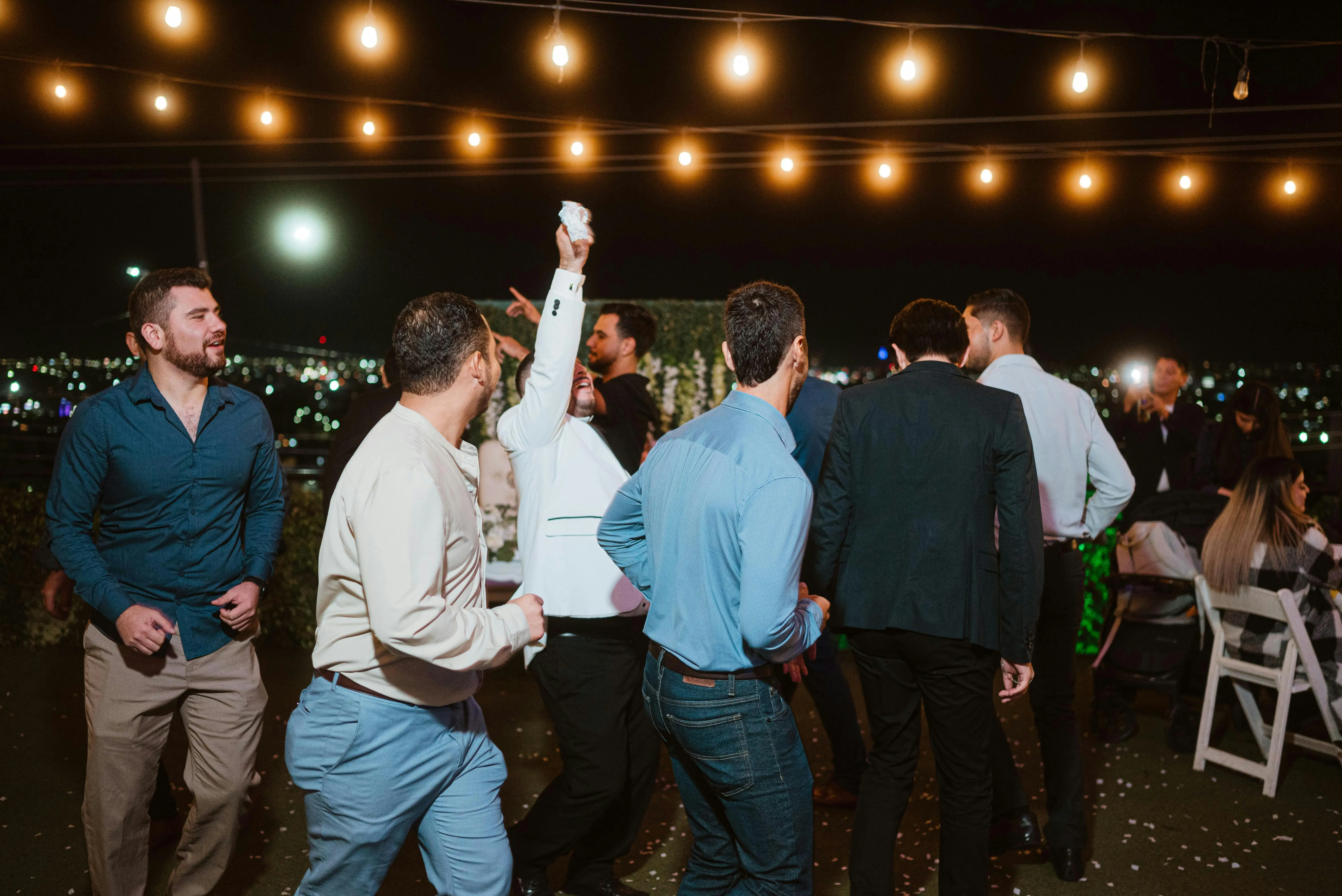
Guests should not feel responsible for completing all 30 ideas. For most weddings, a selection of approximately 12 to 18 prompts will provide enough variety without turning the celebration into an assignment.
Consider the length and structure of your reception. A short dinner may only support a handful of challenges, while a full evening with cocktail hour, speeches, dancing, and a send-off provides more opportunities.
A good final selection includes:
Remove anything that relies on embarrassing a guest, encouraging excessive drinking, entering restricted areas, or photographing someone who may not want the attention.
This is the easiest version to prepare and explain. Place the list on reception tables or include it in the wedding program.
The downside is repetition. If every guest receives the same prompts, you may end up with dozens of pictures of the cake and very few of the less obvious moments.
Divide the list so each table receives its own set of challenges. One table might watch for speech reactions, while another looks for dance-floor moments.
This approach spreads guests’ attention around the reception and produces a wider range of photos. Keep a few universal prompts on every card so nobody feels stuck waiting for one unlikely moment.
Arrange the prompts in a three-by-three or four-by-four grid. Guests can try to complete one row rather than the entire card.
Bingo makes the activity feel more like a game, but a prize is not essential. For many guests, seeing their pictures in the shared wedding gallery is enough.
Start with the ideas above, then replace a few with details specific to your wedding.
You might ask guests to watch for a university friend telling an old story, someone trying the family dessert recipe, or the first person to dance to a song that has meaning to your group. Personal prompts will produce more meaningful pictures than a completely generic list.
Decide whether every guest will see the same checklist, each table will receive different prompts, or the activity will use a bingo grid.
Keep the design readable. Guests should be able to understand the activity within a few seconds without reading a page of instructions.
Place the same gallery link or QR code on each challenge card. Guests can scan it when they are ready to contribute rather than figuring out where to send their pictures later.
GuestCam lets guests upload photos and videos directly to a private wedding gallery through their browser, without downloading an app or creating an account. The gallery’s QR code can be printed on the same card as the hunt.
Scan the QR code with more than one phone and confirm that it opens the correct gallery. Make sure it is large enough to scan when printed and is not placed over a busy pattern.
Ask someone who has not seen the instructions to test the entire process. If they know what to photograph and where to submit it without needing an explanation, the card is ready.
Ask the DJ or MC to make a brief announcement after the ceremony or near the beginning of the reception. There is no need to repeatedly interrupt the evening.
You can use wording such as:
We have a wedding photo scavenger hunt on your table. If you catch any of the moments on your card, take a picture and scan the QR code to add it to our gallery. Join in whenever you like, and please do not interrupt a moment just to complete a challenge.
Some guests will take photos but forget to upload them. Include the gallery link in a message or thank-you note after the wedding so they have another opportunity to contribute.
A good scavenger hunt should make guests more observant without making them intrusive. Include a few simple expectations on the card or wedding website:
These rules are especially important during entrances, speeches, first dances, and other moments the professional photographer has planned to cover.
The hunt only works if guests know where their pictures should go.
Text messages and group chats can be manageable for a small wedding, but submissions may arrive in separate conversations and at different image qualities. A wedding hashtag collects public posts rather than the original files, and it excludes pictures guests do not want to publish.
A private gallery gives everyone the same destination. Add its QR code directly to the hunt card so guests can open the gallery and upload without typing a link. If you use GuestCam for your wedding photos, every guest upload appears in the same gallery and can be downloaded with the rest of the event.
You can also display selected uploads during the reception with a live wedding photo slideshow. If photos will appear publicly at the venue, tell guests in advance and consider reviewing submissions before displaying them.
The strongest wedding photo scavenger hunt is not the one with the longest checklist. It is the one that helps guests notice the people and interactions that make your celebration different from every other wedding.
Choose a manageable set of prompts, make participation optional, and give everyone an easy way to submit what they capture. You will receive more than pictures of scheduled traditions. You will see the reunions, reactions, conversations, and small acts of care that were happening around you all along.

Regan Black is the founder of GuestCam, an event and wedding photo sharing platform trusted by thousands of couples and leading brands to collect and preserve more than 20 million memories. He writes about event technology, wedding planning trends, and how modern couples are reimagining the guest experience.

Scan the QR code or use the link below to step into the guest portal and see how easy it is for guests to join and upload.

.jpg)