Need Help?

You took a great photo at a wedding. Can you post it, or should you wait for the couple?
There is no single waiting period that applies to every wedding. The safest approach is to follow any instructions the couple provided and ask before making their wedding public when their preferences are unclear.
It also helps to separate three different actions: taking a photo, sharing it privately, and posting it publicly. Permission to do one does not necessarily include the others.
Taking a picture for yourself does not automatically mean it is appropriate to publish it. Likewise, uploading a photo to the couple’s wedding gallery does not give everyone in that gallery permission to repost it.
When you are unsure, send the photo directly to the couple or add it to their chosen private wedding photo-sharing gallery. They can enjoy it without the image immediately becoming part of a public feed.
Look for guidance on the wedding website, invitations, ceremony program, signs, or announcements.
An unplugged ceremony generally means phones and cameras should remain put away during the ceremony. It is not an invitation to take photos as long as you promise not to post them. If the couple asks guests to be present, respect the request.
A no-posting request is different. The couple may be comfortable with guests taking photos or uploading them privately while asking that nothing appear on social media.
A wedding hashtag or invitation to share is a sign that posting may be welcome. It is not blanket permission to livestream the ceremony or post every photo you take. Brides’ guidance on wedding social-media etiquette also recommends considering the couple’s instructions, the timing, and whether an image could embarrass someone.
If you want more guidance about taking photos without disrupting the day, see our comparison of professional wedding photos and guest photos.
Ask the couple before posting when:
You should also consider the other people in the photograph. The couple may be comfortable with a post while another guest pictured in it is not.
You do not need to send the couple your entire camera roll for approval. Ask one clear question about their general preference:
I took a few photos that I love. Are you comfortable with guests posting, or would you rather we send them to you privately?
If the couple has not shared anything yet, you can ask:
Would you like us to wait until you post your first wedding photos?
For one particular image:
I would love to share this photo. Are you both comfortable with me posting it?
A quick question is better than assuming that every couple follows the same unwritten rule.
Sending a photo to the couple gives them more control over when and where it is shared. A private wedding gallery can also keep guest photos together without placing them on a public social network.
A private social-media account is more limited than a public one, but it is not the same as sending the image directly. Followers can still save, screenshot, or forward a post.
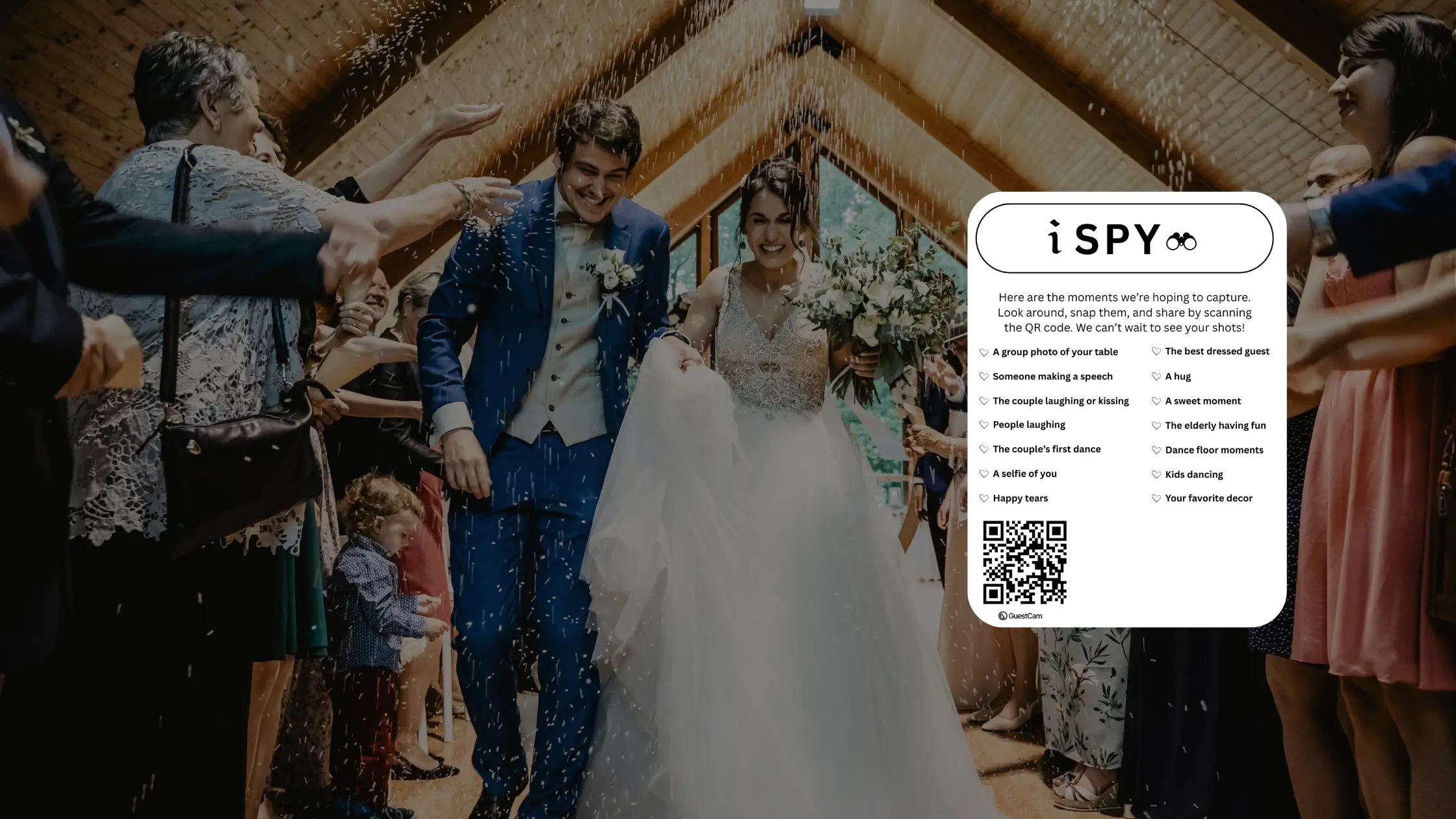
Wedding galleries also have different controls. For example, GuestCam couples can decide whether guests may view other uploads, download files, or only contribute their own photos. They can also moderate new uploads before other guests see them.
Guests should still avoid downloading and reposting someone else’s gallery contribution without permission. Access to a gallery is not ownership of everything inside it.
Do not publicly post a clearly identifiable child without checking with their parent or guardian. Avoid including the child’s full name, location, schedule, school, or other identifying details.
The American Academy of Pediatrics recommends considering how shared images and details may affect a child’s privacy and safety. Even if the wedding couple welcomes social posts, a parent may have a different rule for their child.
The same basic courtesy applies to adults. If someone declines a photo, asks not to be tagged, or requests that an image stay private, respect that preference.
If a photographer’s preview appears in a group chat or gallery, do not assume you can repost it. Check the couple’s and photographer’s sharing instructions first.
Avoid removing watermarks, cropping out credits, applying new filters, or editing a professional image. In the United States, copyright generally protects the photograph created by the photographer, not simply the people shown in it. The U.S. Copyright Office provides additional guidance on copyright and photographs.
This does not mean professional photos can never be shared. It means they should be shared according to the permission or license provided.
Take it down promptly. Remove it from stories, posts, videos, or albums where it appears, then apologize without arguing about your intent.
A simple response is enough:
I’m sorry. I didn’t realize you wanted that moment kept private. I’ve removed it.
You can then ask whether the couple would prefer that your other wedding photos remain private as well.
Guests should not have to guess. Couples can place a short instruction on their wedding website and repeat it through a sign, program, or announcement when necessary.
For an unplugged ceremony:
Please keep phones and cameras put away during the ceremony. You are welcome to take photos afterward.
To delay public posts:
We would love to see your photos, but please wait until we have shared our first wedding pictures before posting publicly.
For private sharing only:
Please help us keep our wedding private. You are welcome to take photos during the reception, but we ask that you share them through our private gallery rather than on social media.
For open sharing:
Photos are welcome after the ceremony. Feel free to share and use our wedding hashtag.
The clearest policy is one guests can understand in a few seconds.
Wedding photo etiquette does not have to be complicated. Follow the couple’s instructions, ask before revealing something they may want to share themselves, and consider everyone else shown in the image.
If you are unsure, send the photo directly to the couple or upload it to the private gallery they provided. They still receive the memory, and you avoid making a personal moment public without permission.
Couples who want one private place for these contributions can use GuestCam to collect wedding photos and video through a QR code or link, without requiring guests to download an app or post anything publicly.
Regan Black is the founder of GuestCam, an event and wedding photo sharing platform trusted by thousands of couples and leading brands to collect and preserve more than 20 million memories. He writes about event technology, wedding planning trends, and how modern couples are reimagining the guest experience.

Scan the QR code or use the link below to step into the guest portal and see how easy it is for guests to join and upload.