Need Help?
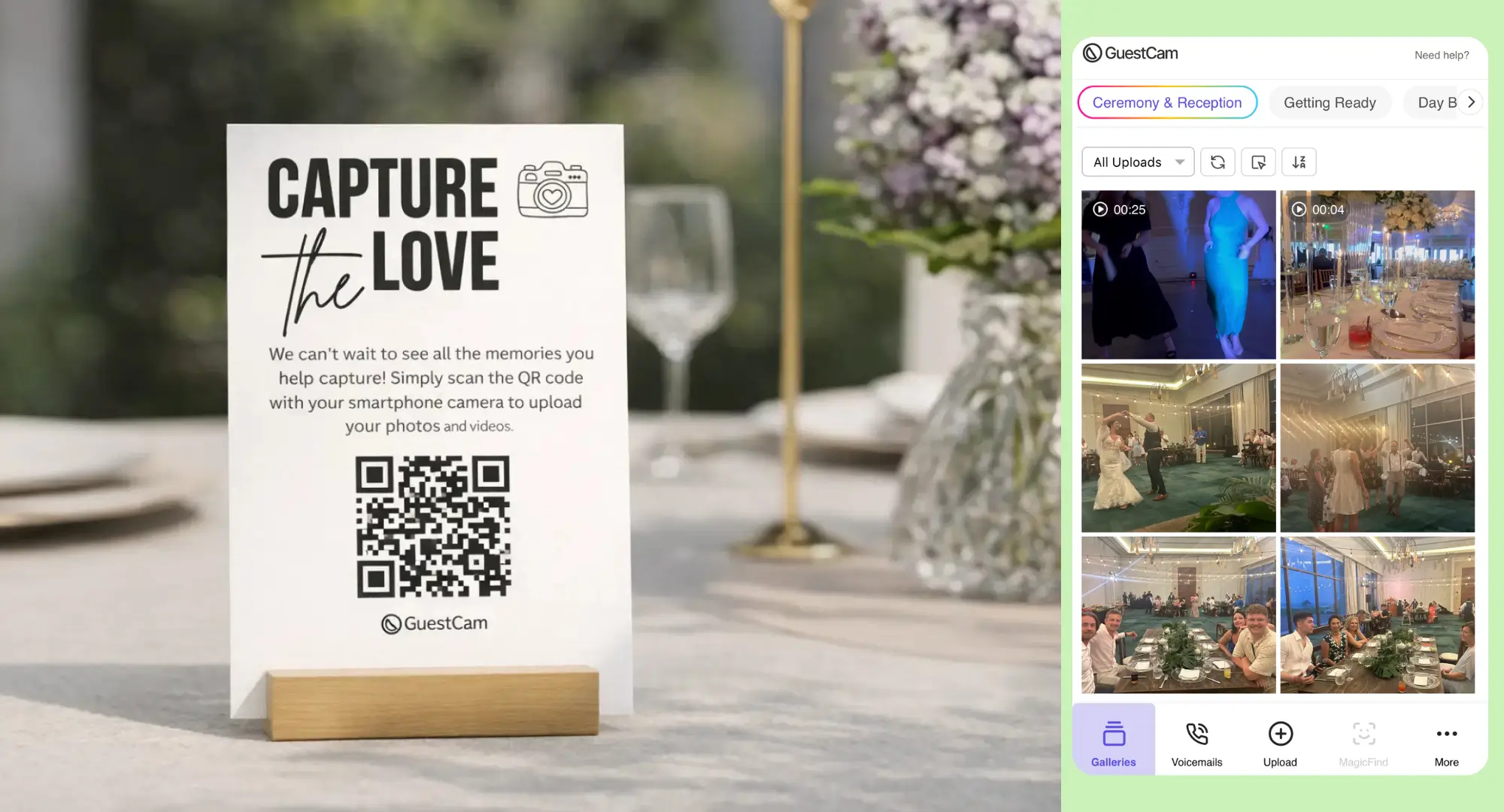
A traditional guest book captures names and short notes, but many of the best memories happen elsewhere: candid photos, funny videos, voice messages, and moments the couple may never see.
A digital guest book lets guests scan a QR code or open a private link to share those memories from their phones. Whether you want a wedding photo sharing gallery, an audio guest book, or a more interactive way to collect wedding memories, it helps you save more from the day.
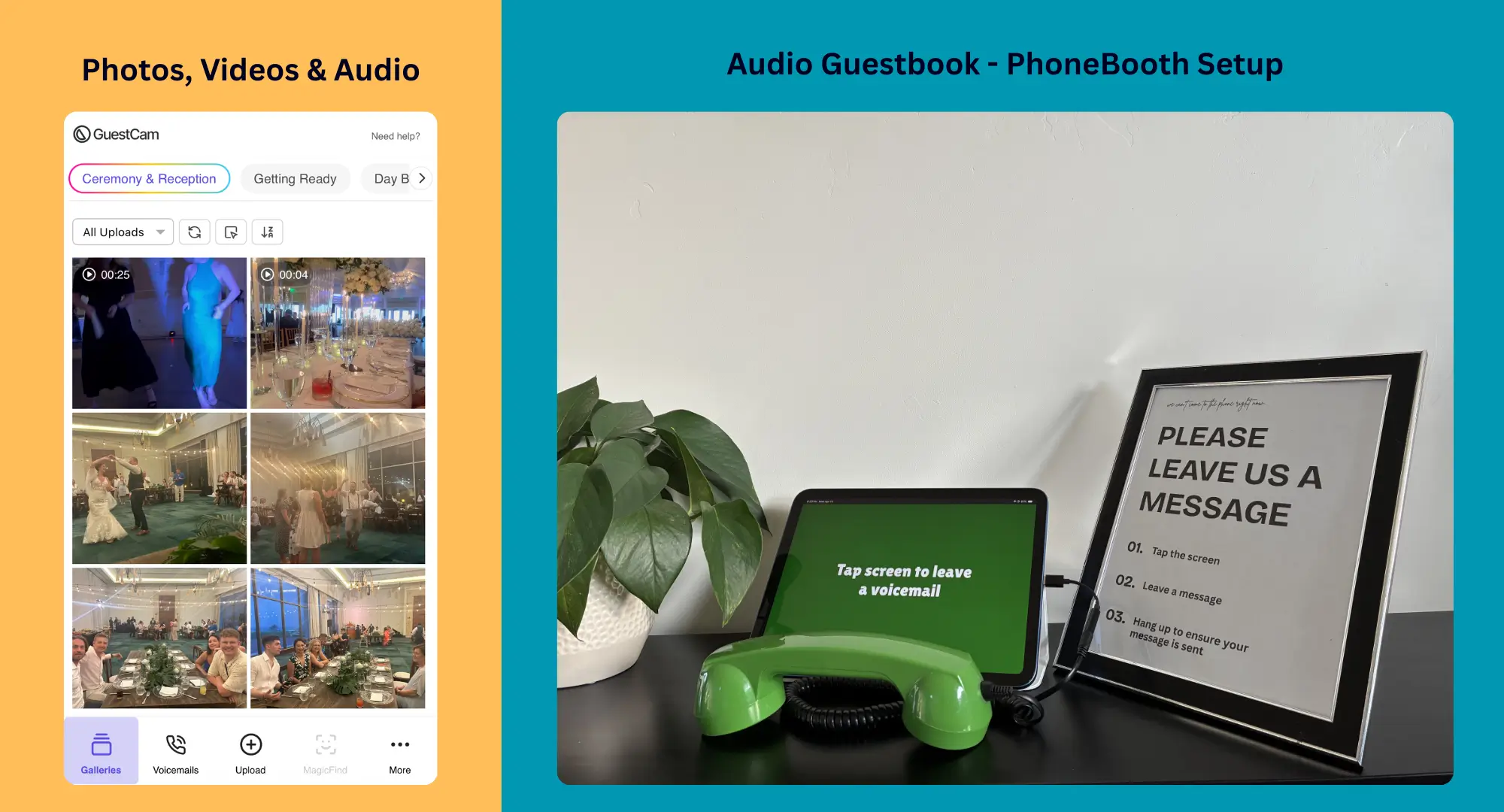
A digital guest book is an online version of a traditional guest book that lets guests leave memories through a QR code or private link. Instead of only signing their name in a physical book, guests can share photos, videos, voice messages, written notes, or a combination of all of them.
For weddings, a digital guest book gives couples a more complete keepsake from the day. Guests can upload the moments they captured on their phones, leave personal messages, and contribute whether they are at the reception, across the room, or unable to attend in person.
Some couples replace the traditional book entirely. Others keep a small physical book for signatures and use a digital guest book alongside it for everything else. Either way, the goal is the same: a richer, more complete record of the day, made by the people who lived it with you.
A digital wedding guest book usually works through a QR code or private link. Once the couple creates their event, they can share the QR code on wedding signs, invitations, programs, table cards, or their wedding website. Guests scan the code with their phone and follow the prompts to leave a memory.
Here’s the basic process:
Set up your event and choose what you want guests to share, from photos and videos to voice messages and written notes, depending on the platform.
Display the QR code where guests will see it, or send the link before, during, or after the wedding.
Guests open the digital guest book from their phone and add their memories. The best digital guest book platforms make this simple, with no app download required.
Every contribution lands in your private gallery as it happens. On some platforms, you can also display uploads in a live slideshow during the reception.
After the wedding, you can revisit the messages, photos, videos, and recordings, then download them as a keepsake.
Collect guest photos, videos, and voice messages with one simple QR code. No app downloads required.
Both digital and traditional guest books have a place at modern weddings, but they serve very different purposes. A traditional guest book is a physical keepsake. A digital guest book is a living record of the day. Here's how they compare:
Not all digital guest books are the same. Some focus on photos. Some focus on voice. Some bring everything together. Choosing the right type depends on what kind of memories you want to keep, and how you want guests to share them.
A photo and video digital guest book lets guests upload the moments they captured on their phones. This is one of the most useful options for weddings because guests often take candid photos and videos the couple would never see otherwise.
Instead of asking people to text photos after the wedding, everything is collected in one shared gallery. Guests can scan a QR code, upload their photos and videos, and contribute to the couple’s memory collection while the event is still happening, or after.
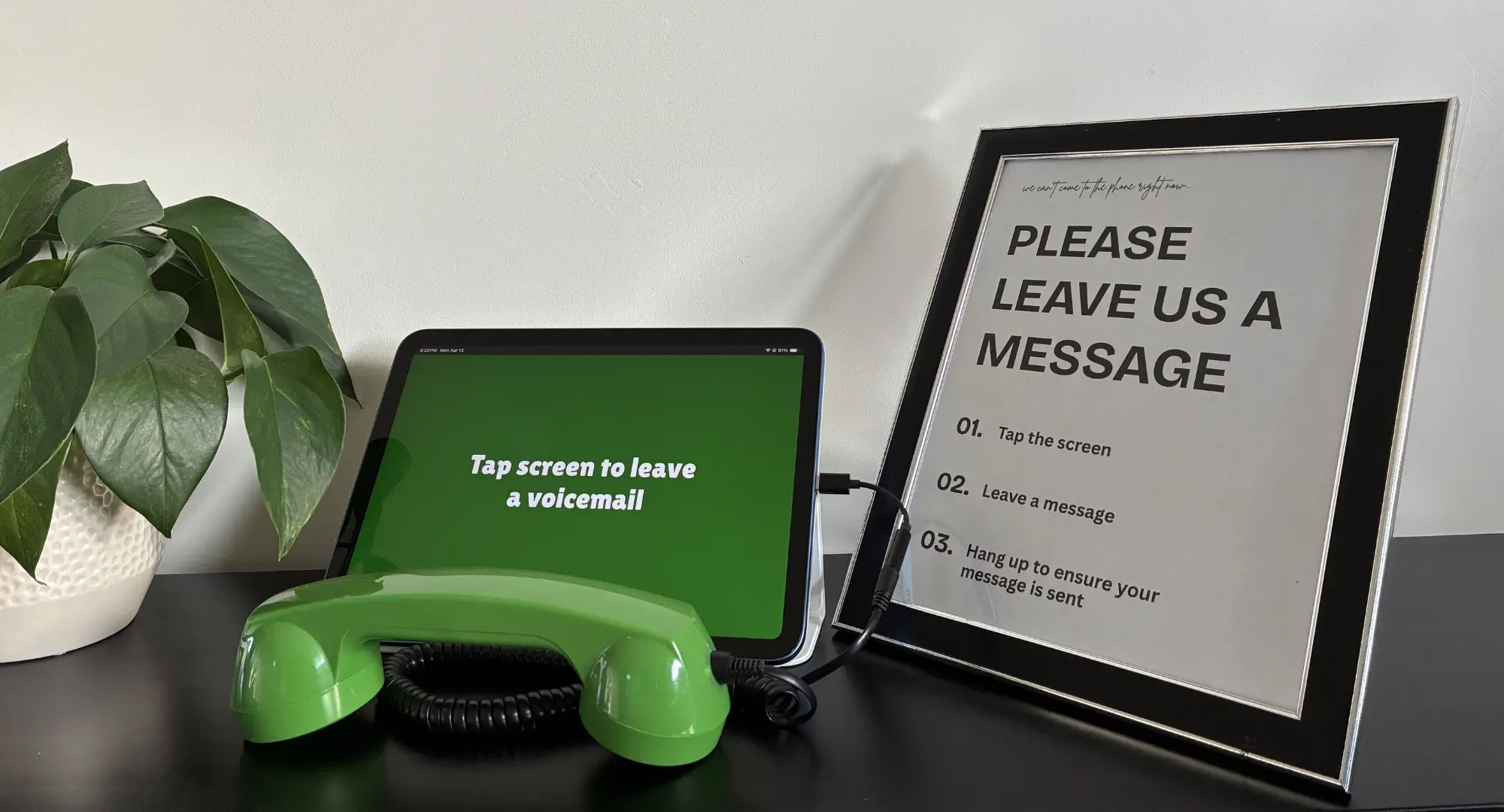
An audio digital guest book lets guests leave voice messages instead of writing notes. This can feel more personal than text because couples get to hear the emotion, laughter, and personality behind each message.
Some audio guest books let guests record from their own phones, while others use a tablet setup, a call-in phone number, or a rented vintage-style phone placed at the event. This is a good option for couples who want something more heartfelt than signatures, but less formal than video messages.
An interactive wedding guest book gives guests more ways to participate during the celebration. Instead of passively signing a book, guests can scan a QR code, upload media, record messages, respond to prompts, or contribute memories throughout the event.
This works especially well when the digital guest book is promoted in multiple places, such as welcome signs, table cards, bar signs, ceremony programs, and the wedding website. The easier it is to access, the more likely guests are to use it.
An all-in-one digital guest book gives guests multiple ways to share memories in one place. For example, guests may be able to upload photos, share videos, leave voice messages, and contribute other personal memories through the same QR code or private link.
This is often the best fit for weddings because every guest contributes differently. Some guests love taking photos. Others may prefer recording a voice message. Others may only want to leave a short note. An all-in-one experience gives couples a fuller picture of the day without needing separate tools for each type of memory.
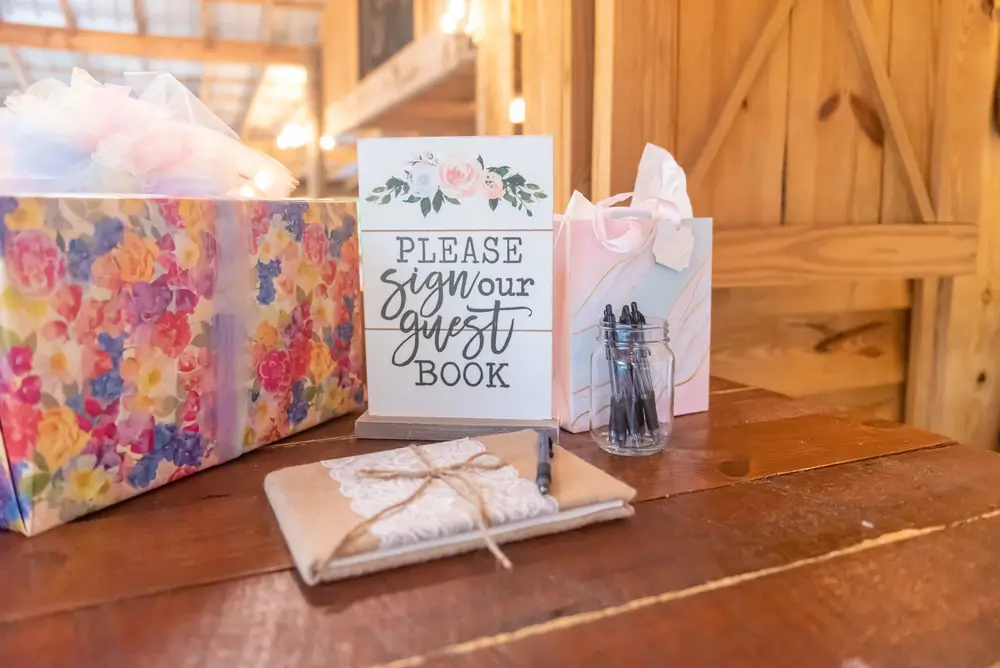
A digital guest book is not the right fit for every couple. A traditional guest book still makes sense if you want a physical keepsake guests can sign in person, especially if the book will be displayed on a shelf, coffee table, or memory box after the wedding.
It can also work well if you like the look of a guest book table. A beautiful book, framed sign, flowers, candles, and a few printed photos can become part of the wedding decor. For couples who care most about handwritten notes and signatures, a physical guest book may be enough.
The main limitation is that a traditional guest book only captures what guests write in that moment. It does not collect the candid photos, videos, voice messages, or behind-the-scenes memories guests capture throughout the day.
That is why many couples use both. A traditional guest book can preserve handwritten names and notes, while a digital guest book collects the photos, videos, audio messages, and personal memories that would otherwise stay on guests’ phones.
A digital guest book should be simple for guests to use and valuable for the couple after the wedding. GuestCam gives guests one easy place to share photos, videos, and voice messages from their phones, without downloading an app.
Instead of limiting the guest book to names and short written notes, GuestCam helps couples collect the candid, funny, emotional, and behind-the-scenes memories guests capture throughout the day.
This makes GuestCam especially useful for weddings because every guest experiences the day differently. One person may capture a funny dance floor video. Another may have a candid photo from cocktail hour. A family member may want to leave a heartfelt voice message. GuestCam brings those moments together in one private gallery, so they are easier to revisit after the wedding.
GuestCam can also make the experience feel more interactive during the event. With a live slideshow, guest photos can become part of the celebration while the wedding is still happening. Instead of collecting memories quietly in the background, couples can let guests see the gallery come to life in real time.
After the wedding, everything is easier to manage because the memories are not scattered across text messages, emails, social media posts, or random shared albums. GuestCam gives couples a central place to look back on the moments their guests shared and download their memories before event storage expires.
A digital guest book is an online guest book that lets guests leave memories through a QR code or private link. Instead of only signing a physical book, guests can share photos, videos, voice messages, written notes, or other memories from their phone.
A digital wedding guest book usually works by giving guests a QR code or link. Guests scan the code, open the guest book on their phone, and follow the prompts to contribute. Depending on the platform, they may be able to upload photos, share videos, leave voice messages, or write personal notes.
Some platforms require an app, but many modern digital guest books work directly in a web browser. With GuestCam, guests can scan a QR code or open a private link and contribute from their phone without downloading an app.
Yes, many digital guest books let guests upload photos and videos. This is one of the biggest advantages over a traditional guest book because it helps couples collect the candid moments guests captured throughout the wedding.
Some digital guest books can collect voice messages. This gives guests a more personal way to leave wishes, advice, stories, or memories for the couple. GuestCam supports voice messages, so couples can collect audio memories alongside guest photos and videos.
A digital guest book is better if you want to collect more than names and short written notes. It can capture photos, videos, voice messages, and memories from guests’ phones. A traditional guest book may still be better if you mainly want a physical keepsake with handwritten signatures.
Yes. If remote guests have the private link, they can usually contribute even if they are not physically at the wedding. This makes a digital guest book useful for destination weddings, international families, elderly relatives, or guests who cannot attend in person.
Most digital guest book platforms let you revisit and download your memories after the event, though storage rules vary by platform. With GuestCam, couples can download their guest-uploaded photos, videos, and voice messages before their event storage expires.
The best digital guest book depends on what you want to collect. If you only want written notes, a simple message-based guest book may be enough. If you want a fuller keepsake with photos, videos, voice messages, QR code access, and a private gallery, GuestCam is a strong option for weddings.

Regan Black is the founder of GuestCam, an event and wedding photo sharing platform trusted by thousands of couples and leading brands to collect and preserve more than 20 million memories. He writes about event technology, wedding planning trends, and how modern couples are reimagining the guest experience.

Scan the QR code or use the link below to step into the guest portal and see how easy it is for guests to join and upload.